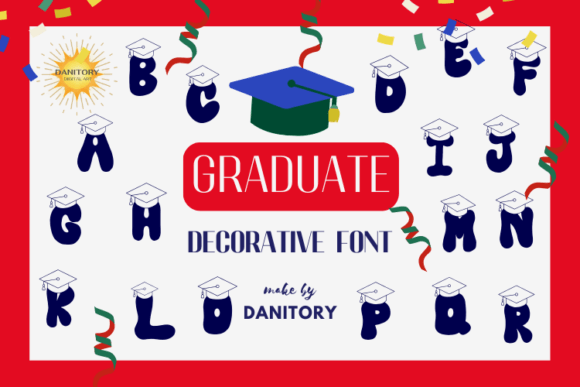
Graduate: The Font That Captures Celebration
There’s a specific kind of energy in the air around graduation time—a mix of pride, relief, and excitement for what’s next. If you’ve ever tried to capture that feeling in a design project, you know it’s not always easy. The Graduate font, however, gets it right. It’s a decorative serif typeface with a distinct personality that immediately evokes academic achievement, ceremony, and a touch of nostalgic charm. Think of it as the typographic equivalent of a graduation cap: recognizable, celebratory, and full of character.
Visually, Graduate is a display font with strong, slightly condensed letterforms and sharp, defined serifs. It isn’t trying to be subtle. The strokes have a consistent weight, giving it a sturdy, reliable appearance. The overall style is reminiscent of collegiate and varsity lettering, but with a cleaner, more refined edge. This makes it far more versatile than a typical "college" font. It carries a sense of tradition and formality, yet remains approachable and friendly. The personality it projects is one of accomplishment, optimism, and classic American style. For designers and creators, it’s a tool that can instantly set a tone of celebration and prestige without saying a word.
Where Graduate Truly Shines
The real-world applications for a font like Graduate are surprisingly broad, especially when you move beyond literal graduation announcements. Its strength lies in projects that need to communicate achievement, milestones, or a classic, all-American aesthetic.
In branding and logo design, Graduate can be a powerhouse for specific niches. An academic tutoring service, a career coaching business, a local bookstore, or even a craft brewery with a collegiate theme could build a strong brand identity around it. It works exceptionally well for monograms and short, impactful taglines. For packaging design, think of artisanal products, specialty foods, or merchandise that wants to convey quality and heritage—like a small-batch sauce brand or a vintage-inspired clothing line.
The font’s celebratory nature makes it a natural fit for personal and commercial projects. This is where it truly excels as a creative font for makers and entrepreneurs. Consider using it for:
- Congratulations cards for graduations, promotions, or new homes.
- Custom apparel like t-shirts, hoodies, and caps for alumni groups, sports teams, or family reunions.
- Promotional merchandise such as tote bags, mugs, and notebooks sold in campus bookstores or online shops.
- Event signage for award ceremonies, academic conferences, or themed parties.
For editorial and web design, use it sparingly but effectively. It’s perfect for headline treatments in articles about education, career advice, or historical retrospectives. On social media, a few words set in Graduate can make a graphic for a “Course Complete” sale or a “Student Discount” promotion feel instantly relevant and engaging.
Making Graduate Work in Your Projects
Choosing any premium font is a decision that impacts your project’s effectiveness. Here’s a practical guide to evaluating if Graduate is the right typeface for your work and how to use it well.
Evaluating Project Fit
Ask yourself: does my project’s core message align with Graduate’s personality? If you’re designing for a law firm or a medical practice, its celebratory, casual flair might undermine the desired tone of seriousness and precision. However, for a fitness brand promoting “graduating” to the next level of training, or a tech blog celebrating a “launch day,” it could be a clever, engaging choice. Always match the font’s voice to your project’s goals.
Mastering Font Pairings
A display font like Graduate should rarely carry the weight of an entire design. Its real power is unlocked through thoughtful font pairing. The goal is balance. Pair it with a clean, neutral sans serif font for body copy to ensure readability. Fonts like Open Sans, Lato, or Montserrat provide a modern, quiet counterpoint that lets Graduate’s personality pop for headlines and key phrases. Avoid pairing it with other highly decorative or script fonts, as this will create visual chaos. For a more traditional feel, a simple, sturdy serif font can also work, but test carefully to avoid a dated look.
Testing for Readability and Hierarchy
Graduate is a display font, meaning it’s designed for impact at larger sizes. Never use it for long paragraphs of text; its decorative details will become noise and hurt readability. Instead, use it to establish a clear visual hierarchy. Set your main headline or a key call-to-action in Graduate, then use your paired font for subheads and body text. Always test your designs at the size they’ll be viewed—a banner on a website needs different spacing than text on a printed mug.
Understanding What’s Included
Before purchasing, review the font’s character set and styles. Does it include multiple weights (like Regular and Bold)? Are there stylistic alternates or ligatures that could add variety? Check for extensive language support if you’re working on international projects. A well-made commercial font will offer these extras, giving you more creative flexibility.
Navigating Commercial Licensing
This is a critical, often overlooked step. If you plan to use Graduate on products for sale—like those t-shirts, mugs, or digital templates—you absolutely need to verify the font’s license permits commercial use. Most premium fonts sold through reputable marketplaces include this, but always read the End User License Agreement (EULA). Using a font without the proper license for commercial projects can lead to legal issues. Investing in a proper license is part of respecting the type designer’s work and protecting your own business.
Ultimately, Graduate is more than just a “graduation font.” It’s a versatile design asset