Bame Typeface: Adding a Lively Curve to Your Visual Voice
In the crowded world of digital content, standing out is less about shouting and more about speaking in a distinct tone. If you have ever scrolled through a feed of sterile, geometric sans serif fonts and felt a longing for something with more soul, you might be ready for Bame. This is not just another typeface; it is a visual statement. Bame is a premium display font characterized by its fluid lines and energetic personality. It is designed for creators who need their typography to convey movement, warmth, and individuality rather than just plain information.
The Visual Soul of Bame
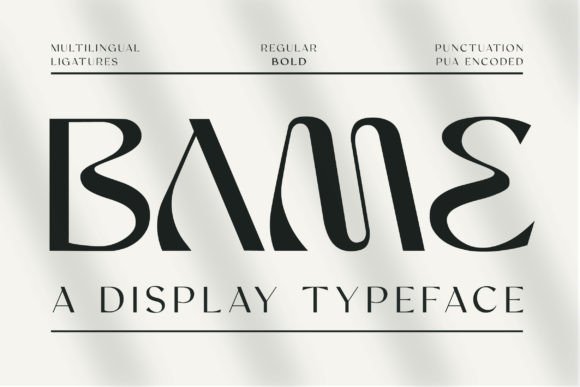
At its core, Bame defies the rigidity of modern typography. Where many contemporary fonts rely on sharp corners and strict grids, Bame embraces the curve. The letterforms flow into one another with a natural rhythm that feels almost organic. It possesses a distinct character that bridges the gap between a structured serif font and a fluid script font. It is not a handwritten font in the traditional sense—it lacks the messy imperfections of actual handwriting—but it captures the spirit of hand-lettering with a polished, professional finish.
When you look at the anatomy of Bame, you notice the subtle weight distribution and the lively bounce in the baseline. This isn't a typeface that sits quietly in the background; it demands attention. However, it does so with charm rather than aggression. The curves are distinct enough to be memorable but controlled enough to remain legible at various sizes. This balance makes it a versatile creative font for projects that require a human touch without sacrificing professionalism.
Where Bame Fits Best: Practical Applications
Understanding where to deploy a display font like Bame is crucial for effective design. Because of its distinct personality, it shines brightest in applications where short bursts of text need to carry significant weight. Think of it as the accent wall in a room—you don't paint every surface with it, but you use it to define the space.
Branding and Logo Design
For entrepreneurs and small business owners, logo design is often the first hurdle. A brand identity needs to communicate values instantly. Bame is an excellent choice for brands that want to appear approachable, creative, and energetic. It works particularly well for lifestyle brands, boutique agencies, wellness coaches, or artisanal product makers. If your brand narrative is about creativity and connection, Bame provides the perfect visual shorthand. It pairs beautifully with a neutral sans serif font for body text, allowing the logo to pop while the supporting copy remains clean.
Editorial and Publishing
In editorial design, hierarchy is king. You need to guide the reader's eye from the headline to the sub-header and finally to the body copy. Bame excels as a headline typeface. Its lively personality grabs attention on a magazine cover, a blog post header, or a book title. For publishers and bloggers, using Bame for titles can increase click-through rates because it breaks the visual monotony of standard web fonts. However, it is strictly a headline tool; using it for long-form paragraphs would likely hinder readability due to its decorative nature.
Packaging and Product Design
If you are designing physical products, packaging design is your silent salesperson. Bame offers a tactile quality that translates well to print. Imagine this font on a coffee bag, a cosmetic label, or a greeting card. The curves suggest quality and care. It gives the impression that a human crafted the product, which is a powerful psychological trigger for consumers tired of mass-produced goods.
Digital Spaces: Web and Social
Digital real estate is fast-moving. On social media graphics, you have about three seconds to make an impact. Bame’s distinct curve ensures your posts stop the scroll. It is fantastic for Instagram quotes, sale announcements, and YouTube thumbnails. In web design, it should be used sparingly—perhaps for the main hero statement or call-to-action buttons—to maintain fast load times and accessibility standards while keeping the site visually engaging.
Strategic Impact: Perception and Engagement
Typography influences psychology. The fonts you choose tell your audience how to feel about your content before they even read a word. Choosing Bame signals that your brand is modern, creative, and confident. It moves away from the cold, corporate feel of default system fonts.
When used correctly, Bame enhances visual hierarchy. By reserving this typeface for high-level elements, you create a clear distinction between primary information and supporting details. This helps with audience engagement because users can scan content easily. If a reader sees a wall of text in a complex font, they leave. If they see a catchy header in Bame followed by readable body text, they stay.
Furthermore, consistency in using a unique font like Bame builds recognition. Over time, your audience will begin to associate that specific style with your content. This is the foundation of strong brand identity—repetition of distinct visual elements.
Implementation Guide: Getting the Most Out of Bame
Adopting a new typeface requires more than just installation. To truly leverage Bame as a design asset, you need to be strategic.
Font Pairing Strategies
Because Bame has such a strong personality, it needs a quiet partner. The art of font pairing is about contrast. You generally want to avoid pairing Bame with another decorative or script font, as this creates visual chaos. Instead, pair it with a robust, neutral sans serif font or a clean geometric serif font. The simplicity of the body text will allow the curves of Bame to breathe. For example, a light-weight sans serif for paragraphs provides a modern backdrop that lets Bame’s headlines shine.
Technical Considerations: PUA Encoding
One of the most practical features of this typeface is that Bame is PUA encoded. This is a technical detail that has massive practical benefits. PUA (Private Use Areas) encoding means that all the extra glyphs, ligatures, and stylistic alternates are accessible even in basic design software that doesn't support OpenType features natively. You don't need to be an expert in Adobe Illustrator to access the fancy swashes. Whether you are using a simple text editor or a complex design suite, you can copy and paste the special characters you need. This makes it an incredibly user-friendly option for hobbyists and crafters who might be using platforms like Canva or Silhouette Studio.
Readability and Licensing
Always test your typography. While Bame is legible for display purposes, you must check how it renders on different devices, especially mobile phones. Ensure the letter spacing (tracking) is appropriate so the curves don't overlap awkwardly at smaller sizes. Additionally, always verify the commercial font license. If you are using Bame for a client project or selling merchandise with the font on it, ensure your license covers commercial usage. Respecting font licensing protects your business and supports the type designers who create these modern typography assets.
Final Thoughts on Choosing Bame
Selecting a font is selecting a voice. Bame is the voice of creativity, energy, and distinctiveness. It is not the right choice for a legal contract or a medical instruction manual, but for a wedding invitation, a startup logo, a podcast cover, or a marketing campaign, it is exceptional. It offers the polish of a premium font with the accessibility of a tool designed for the modern creator. By integrating Bame into your toolkit, you are not just choosing letters; you are choosing to make your work memorable.