Mexican Pattern: A Font Rooted in Cultural Fusion
The Mexican Pattern typeface is more than just a set of letters; it's a visual story. This premium display font captures the essence of a vibrant cultural tapestry, making it a powerful tool for any designer or creator looking to inject energy and authenticity into their work. Its ornate, colorful style is a direct result of a profound historical blend, where Aztec and Mayan heritage intertwined with Spanish traditions to create something entirely new and visually stunning.
A Visual Language of Color and Contrast
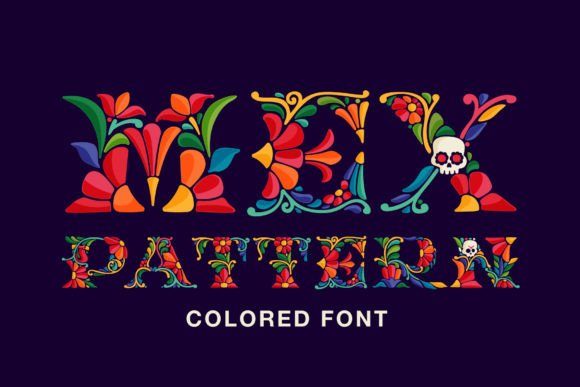
At its core, the Mexican Pattern font is defined by its bold personality. The letterforms are richly decorated, featuring intricate patterns that evoke traditional textile art, tile work, and folk art. The color palette is inherently high-contrast and joyful. Think of the deep terracotta of clay pottery paired with the brilliant blue of a clear sky, or the lush green of jungle foliage meeting the fiery orange of marigolds. This isn't a font that whispers; it speaks with a confident, celebratory voice.
A particularly striking characteristic is the incorporation of skull motifs, a nod to the Mexican cultural perspective on life and death. This isn't meant to be morbid but rather a celebration of life's cyclical nature, a tradition seen in festivities like Día de los Muertos. For a designer, this means the font carries a built-in narrative and a depth of meaning that can resonate deeply with audiences familiar with or curious about this heritage.
Strategic Applications for Maximum Impact
Given its distinctive style, Mexican Pattern excels as a display font. It’s not designed for body text but for headlines, logos, and short, impactful phrases where its personality can shine without compromising readability. In logo design, it can instantly establish a brand identity that is festive, artisanal, or culturally connected. Imagine a boutique food brand, a craft brewery, or a travel company specializing in Mexican tours using this font to create an unforgettable mark.
In editorial design and packaging design, it can serve as a powerful headline font to grab attention on magazine covers or product labels. For a book cover or a poster, it sets an unmistakable mood. Its ornate nature also makes it a fantastic choice for social media graphics where standing out in a crowded feed is crucial. A single, well-placed word in Mexican Pattern can stop the scroll and communicate a brand's vibe instantly.
Pairing and Practical Implementation
The key to using a creative font like Mexican Pattern effectively lies in balance. Its ornate details mean it should be paired with a simpler sans serif font or a clean serif font for any supporting text. This creates a clear visual hierarchy, allowing the display font to command attention while the secondary font ensures legibility for longer copy. A pairing with a geometric sans serif, for instance, can modernize its look, while a classic serif can lean into a more traditional, elegant feel.
When evaluating this typeface for a project, consider the brand's core message. Is the goal to evoke heritage, craftsmanship, celebration, or bold creativity? If so, Mexican Pattern could be a perfect fit. Always test it in context. See how it looks in your specific color scheme and alongside your other design assets. Most premium fonts come with various styles or alternates—check what's included to maximize your flexibility.
Beyond Aesthetics: Brand Perception and Engagement
Choosing a typeface is a strategic decision that influences brand perception. The Mexican Pattern font conveys a sense of joy, tradition, and unapologetic boldness. It can make a brand feel more approachable, human, and culturally aware. For a small business or a content creator, using such a distinctive font can be a cornerstone of building a strong, recognizable brand identity that fosters audience engagement.
However, its strength is also its limitation. It’s a specialist, not a generalist. It would be inappropriate for a corporate law firm or a minimalist tech startup. But for the right project—a festival poster, a restaurant menu, a handmade goods store, a blog about travel or culture—it becomes an invaluable design asset. It does more than display words; it communicates an entire aesthetic and worldview, making it a truly unique addition to a designer's toolkit.