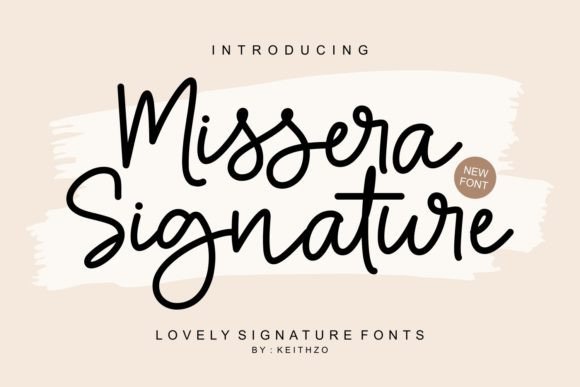
Missera Signature: The Creative Font That Feels Handwritten
There is a specific kind of tension in design projects where you need to look professional but not corporate. You want a typeface that feels personal—like it was just scrawled by a human hand—but clean enough to actually work in a logo or on a website. Finding that balance usually means settling for something generic, but Missera Signature offers a different path. It is a charming, outlined typeface that manages to be both playful and polished. If you are tired of the same standard serif and sans-serif options cluttering your toolkit, this font brings a breath of fresh air that can genuinely elevate your visual storytelling.
At its core, Missera Signature is a script font with a distinct personality. It isn't just another handwritten font with shaky lines meant to mimic imperfection. Instead, it features harmonious outlines and smooth curves that suggest a confident, artistic hand. The style sits comfortably in the realm of modern typography, bridging the gap between casual doodles and elegant calligraphy. Because it is PUA encoded, you have immediate access to every glyph and ligature it offers. For designers, this is a technical detail that matters immensely; it means you can easily swap out characters to get that perfect swoosh or connection between letters without wrestling with complex software settings.
Why "Cute and Charming" Works for Business
It is easy to assume that a font described as "cute" is only suited for children’s party invitations or scrapbooking. However, that perception misses a massive trend in contemporary brand identity. Consumers today, particularly millennials and Gen Z, respond to brands that feel approachable and human. If your branding is too rigid, it creates distance. If it is too messy, it looks amateur. Missera Signature occupies the sweet spot.
Imagine a boutique coffee roaster or a handmade jewelry line. Using a heavy, blocky corporate font sends the wrong message. Using a messy scrawl might look untrustworthy. Missera Signature, with its outlined style, adds a layer of sophistication to the "cute" factor. It suggests that the creator behind the brand pays attention to detail but doesn't take themselves too seriously. This makes it an excellent choice for logo design, specifically for brands targeting lifestyle, fashion, food, or creative services.
Practical Applications Across Media
The versatility of a premium font lies in how well it adapts to different mediums. Missera Signature performs surprisingly well across both digital and print formats, provided you use it with intention. Here is where it truly shines:
- Digital and Web Design: On a landing page, you might use a sans serif font for your body text to ensure maximum readability. You can then use Missera Signature for your H2 headers or call-to-action buttons. The outlined nature of the font adds visual texture without making the page feel heavy. It draws the eye exactly where you want it.
- Social Media Graphics: In the fast-scrolling world of Instagram or TikTok, standard text gets ignored. A creative font like this acts as a stopper. Because it looks like a doodle or a personal note, it feels native to social platforms. Use it for quotes, sale announcements, or highlight covers to inject personality into your grid.
- Packaging Design: If you are designing a label for a candle, a jar of jam, or a beauty product, typography dictates the shelf appeal. Missera Signature works beautifully for secondary information or flavor names. It adds a handcrafted feel to the packaging design, suggesting that a real person made the product with care.
- Editorial Design: In magazines or lookbooks, drop caps and pull quotes need to stand out. Using this font for those specific elements breaks up the monotony of standard serif fonts used for articles. It guides the reader’s eye through the hierarchy of the page.
Strategic Typography: Pairing and Hierarchy
One of the most common mistakes I see in modern typography is using a decorative font for everything. If you write a paragraph in Missera Signature, you will likely struggle with readability, especially at smaller sizes. This is a display font by nature—it is meant to be seen, not necessarily read in bulk.
The real power of this typeface comes from font pairing. To create a balanced visual hierarchy, you need to contrast the whimsical nature of Missera Signature with something structured. A clean geometric sans serif font like Montserrat or Lato provides the perfect counterweight. The sans-serif handles the heavy lifting of body copy, ensuring your message is understood, while Missera Signature provides the flair and emotional hook.
Consider the psychological impact on your audience. When a user sees a rigid block of text, their brain categorizes it as data or instruction. When they see the flowing lines of a handwritten font, their brain categorizes it as a voice or a conversation. By using Missera Signature for your headings or accent text, you are subtly telling your audience, "We are creative, we are approachable, and we care about aesthetics." This is a subtle but powerful way to build brand recognition and trust.
Technical Considerations for Creators
Before you commit to incorporating this into your design assets, it is worth doing a quick technical audit. First, look at the licensing. Since Missera Signature is positioned as a commercial font, you need to ensure your license covers your specific usage. If you are a freelancer creating a logo for a client, your client generally needs the license to use the font in their final branding materials. Always read the fine print.
Second, test your pairings in context. Don't just look at the letters "Aa" in your design software. Type out a realistic mock-up. For example, if you are designing a menu, type out "Avocado Toast with Chili Flakes" in Missera Signature. Does the "v" connect to the "o" awkwardly? Are the ligatures working? Because this font is PUA encoded, you can manually adjust these connections if needed, but it is better to know what you are getting into before you are deep into the production phase.
Finally, think about color. An outlined font behaves differently than a solid font. It allows the background to become part of the letterform. This means Missera Signature looks incredible over textured backgrounds, watercolor washes, or photography. If you place it over a solid, flat color, it might look a bit thin or hollow. Use this to your advantage. Layer it over images to create a sophisticated, editorial look that feels high-end.
Final Thoughts on Adding Character to Your Work
Designers often get stuck in ruts, relying on the same five fonts for every project. Missera Signature is a tool that breaks that cycle. It is not just about being "cute"; it is about adding a human touch to digital spaces that often feel sterile. Whether you are a small business owner designing your own Instagram stories, a marketer creating an email header, or a professional designer working on a full brand identity, this font offers a specific utility: it makes things feel personal.
It encourages you to play with layout, to experiment with layering, and to think about how typography influences the viewer's mood. By adding it confidently to your projects, you aren't just installing a new font file; you are expanding your creative vocabulary. The results are often surprising—in a good way. It brightens up the work, turning standard designs into something that feels curated and intentional.