Wholestory: The Handwritten Font That Balances Charm and Elegance
When you're designing something meant to feel personal—an invitation, a thank-you note, a brand that needs a human touch—you reach for a typeface that whispers rather than shouts. Wholestory is that font. It carries the warmth of handwriting without sacrificing the polish your projects demand. The result is a typeface that feels approachable yet refined, casual yet intentional.
What Makes Wholestory Stand Out
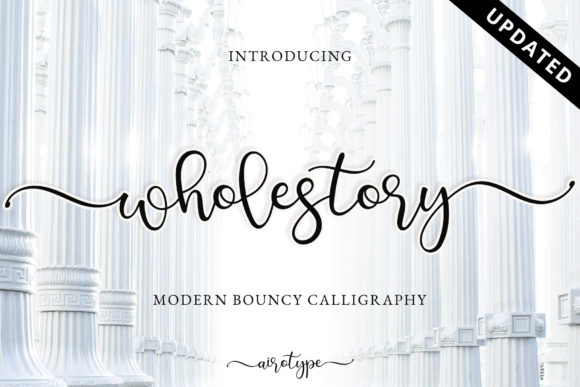
At first glance, Wholestory reads as a handwritten font, but look closer and you'll notice the craft behind every curve. The baseline varies naturally, mimicking the way a pen moves across paper. Smooth lines connect letters with a fluidity that feels organic rather than mechanical. The glyphs themselves are gorgeous—each one designed with care to maintain visual harmony across the entire character set.
What really sets this premium font apart are the stunning alternates. These alternate letterforms give you creative control. Want a more decorative capital "S" for a logo? It's there. Need a simpler version for body text on a greeting card? Wholestory delivers. This flexibility makes it far more versatile than most script fonts you'll encounter in the modern typography landscape.
The overall personality strikes a balance that's surprisingly difficult to achieve. It's charming enough for a handmade candle label. It's elegant enough for a wedding invitation suite. It's legible enough for a blog header or a social media quote graphic. That range is what makes Wholestory worth your attention.
Where Wholestory Works Best
Think about the projects where you need a creative font that feels authentic. Wedding invitations are the obvious starting point. Wholestory's flowing letterforms and varied baseline create that romantic, hand-lettered look couples gravitate toward. But it extends well beyond weddings—anniversary cards, baby shower invitations, and milestone celebrations all benefit from this kind of warmth.
For brand identity work, Wholestory shines in specific contexts. Artisan bakeries, boutique florists, independent coffee shops, lifestyle bloggers, and handmade goods sellers often need a typeface that communicates authenticity without looking amateurish. This script font walks that line effectively. Pair it with a clean sans serif font for body copy, and you have a brand system that feels cohesive and professional.
Logo design is another strong application. The gorgeous alternates and swashes give you room to customize letterforms until the wordmark feels uniquely yours. Because Wholestory is PUA encoded, accessing every glyph and swash is straightforward—you're not wrestling with workarounds or limited character maps.
Consider these practical applications:
- Greeting cards and stationery where personal tone matters
- Thank you cards for e-commerce packaging inserts
- Social media graphics featuring inspirational quotes or announcements
- Editorial design for magazine pull quotes and feature headers
- Packaging design for artisan and handmade products
- Business cards for creative professionals and freelancers
- Web design hero sections and call-to-action banners
How the Right Font Shapes Perception
Typography influences how people feel about your content before they read a single word. A display font like Wholestory signals warmth, creativity, and approachability. When someone sees it on a product label or website header, they form an impression about the brand's personality. That impression sticks.
For small business owners and entrepreneurs, this matters more than most realize. Your font pairing choices communicate your positioning. A handwritten font paired with a geometric sans serif tells a different story than two serif fonts stacked together. Wholestory gives you a reliable anchor for the human, personal side of your visual hierarchy.
Readability deserves honest consideration here. Wholestory performs beautifully at larger sizes—think headlines, logos, and display text. At smaller sizes, like lengthy product descriptions or dense paragraphs, a handwritten font naturally loses some legibility. That's not a flaw; it's how script fonts work. The smart approach is using Wholestory where it excels—headers, pull quotes, short phrases, names—and choosing a complementary serif font or sans serif for longer reading passages.
Working With Wholestory in Practice
Before committing any commercial font to a project, test it in context. Set your actual text, not just "Lorem ipsum." See how your business name, tagline, or headline reads in Wholestory. Check the alternates—cycle through them and notice how different letter combinations feel. Some projects benefit from the more ornate swashes; others need the cleaner default forms.
Font pairing is where many designers either elevate or undermine a project. Wholestory pairs well with understated typefaces. A simple, geometric sans serif lets the handwritten elements breathe. If you're working on editorial design, try pairing it with a classic serif font for body text—the contrast between structured and organic creates visual interest without competing for attention.
Review the full character set before you start designing. Since this premium font includes extensive alternates and swashes, understanding what's available helps you make intentional choices rather than settling for defaults. The PUA encoding means everything is accessible in standard design software, which saves time during production.
Licensing is worth a moment of attention. If you're using Wholestory for client work, merchandise, or commercial products, confirm the license covers your intended use. Most design assets marketplaces outline these terms clearly, and understanding them upfront prevents headaches later.
Ultimately, the best way to evaluate any typeface is to put it to work. Download Wholestory, set a few real projects in motion, and see how it performs across different sizes, colors, and backgrounds. A font that looks beautiful in a specimen sheet might feel wrong in your specific context—or it might be exactly the missing piece your brand identity needed. Let the work guide your decision.