Unlocking the Vintage Charm of Coaster Ghost for Modern Projects
There is a certain weight to a typeface that feels like it has a history. It doesn't just sit on the page; it carries a mood. When you first encounter Coaster Ghost, that mood is immediate: it’s atmospheric, grounded, and unapologetically dramatic. As a premium font, it steps away from the safe neutrality of modern minimalism and embraces a vintage, gothic character that can be surprisingly versatile. For designers, brand strategists, and content creators looking to make a distinct impression, understanding how to wield this kind of creative font is key to elevating a project from standard to memorable.
Defining the Visual Identity of Coaster Ghost
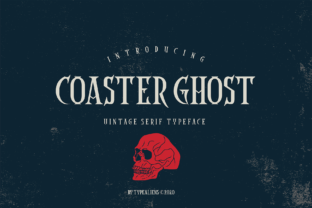
At its core, Coaster Ghost is a serif font, but not the kind you’d expect to find typesetting a corporate annual report. Its visual characteristics are defined by sharp, high-contrast strokes and subtle irregularities that mimic the pressure and ink spread of vintage letterpress printing. The serifs are pronounced and often bracketed, giving each letterform a solid foundation. There’s a gothic quality to its architecture—think of the spires and arches in old cathedral typography, softened just enough to remain approachable for commercial use.
The personality of this typeface is confident and slightly rebellious. It doesn’t whisper; it speaks with authority. This makes it an exceptional display font, designed to command attention in headlines, logos, and titles rather than flowing body text. Its appeal lies in its ability to evoke a specific era without feeling dated. It carries the spirit of early 20th-century posters, vintage tattoo art, and old-world signage, yet it’s crafted with the precision of modern typography. For anyone building a brand identity, Coaster Ghost offers a shortcut to a rich, narrative-driven aesthetic.
Practical Applications Across Creative Fields
The true test of a typeface is where it performs best. Coaster Ghost shines in contexts where storytelling and atmosphere are paramount. In logo design, it provides an instant vintage or artisanal feel, perfect for craft breweries, barbershops, boutique hotels, or independent record labels. Its strong silhouette ensures recognition even at smaller sizes, a crucial factor for branding consistency.
For packaging design, especially for products like whiskey, coffee, or handmade goods, this font adds a layer of perceived heritage and quality. It suggests craftsmanship. In editorial design, it can be used for chapter titles, pull quotes, or magazine mastheads to break the monotony of standard sans serif fonts. The same applies to social media graphics; a post using Coaster Ghost for a key headline will stop a scroll far more effectively than a generic alternative.
It’s also a powerful tool for web design, not for paragraphs of text, but for hero section headings or call-to-action buttons where you want to inject personality. Entrepreneurs and small business owners can use it in menus, event posters, or merchandise to create a cohesive and immersive customer experience. The font acts as a design asset that bridges the gap between a digital presence and physical products.
The Strategic Impact on Brand Perception and Readability
Choosing a typeface like Coaster Ghost is a strategic decision that directly influences how an audience perceives a brand. It moves a brand’s voice away from the generic and toward the specific. Using it consistently across touchpoints—from a website header to a business card—builds strong brand recognition. It signals that the brand values character and isn’t afraid to stand out, which can foster deeper audience engagement.
However, this power requires careful consideration of readability. As a decorative serif, it excels in short bursts but can become challenging to read in long sentences or at very small sizes, especially on screens. This is where the principle of font pairing becomes essential. Coaster Ghost works best when paired with a highly legible, neutral companion. A clean sans serif font for body text or a simple, complementary script font for accents can create a balanced visual hierarchy. The display font grabs attention, while the supporting typeface ensures the message is delivered clearly.
Making the Most of Coaster Ghost: A Practical Guide
Before integrating Coaster Ghost into your next project, a methodical approach will yield the best results. First, evaluate the project fit. Does your brand or creative work have a vintage, artisanal, edgy, or historical dimension? If the answer is yes, this font is a strong candidate. If your project demands ultra-clean, futuristic, or corporate neutrality, you may need to look elsewhere.
Next, test font pairings. Don’t just look at the font in isolation. Mock up a headline in Coaster Ghost with a paragraph set in a popular sans serif like Helvetica, Arial, or a more modern alternative. See how the contrast works. Does the display font overshadow the content, or do they complement each other? Pay close attention to the x-height and weight balance.
Also, review the included styles. Many premium fonts come with multiple weights (light, regular, bold) or stylistic alternates. These can offer additional flexibility, allowing you to use a lighter weight for a more delicate feel or a bold weight for maximum impact. Check the character set for special glyphs, ligatures, or multilingual support that might be crucial for your audience.
Finally, understand the commercial licensing. If you’re using the font for a client project, a product for sale, or widespread marketing, ensure your license covers that use. Reputable font foundries provide clear licensing terms for desktop, web, and app usage. Treating fonts as professional design assets means respecting their licensing, which in turn supports the creators who produce high-quality typefaces.
In the end, Coaster Ghost is more than just a set of letters. It’s a tool for storytelling. By understanding its strengths, acknowledging its limitations, and applying it with intention, you can harness its vintage gothic charm to create designs that are not only visually striking but also deeply resonant with your intended audience.