Why Hello Bluebird Feels Like a Fresh Start for Your Brand
There's a particular kind of design challenge that comes up again and again. You're building something that needs to feel approachable but polished. Human but not sloppy. Current but not trendy in a way that will age poorly. This is the space where Hello Bluebird lives, and it does so with remarkable ease.
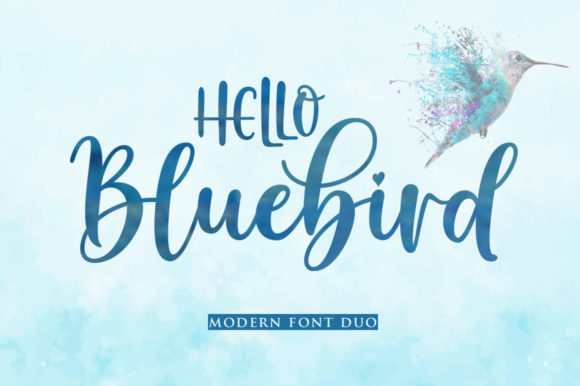
At its core, Hello Bluebird is a modern duo font pairing—a script and a sans serif designed to work together. The script carries smooth, flowing curves that feel hand-lettered without the messiness that often comes with casual typefaces. The sans serif counterpart is clean and geometric enough to ground the script without competing for attention. Together, they create a visual conversation that feels natural, like two voices that actually belong in the same room.
The Personality Behind the Curves
What makes Hello Bluebird stand out isn't just its technical execution—it's the feeling it communicates. The script component has a warmth that suggests someone took their time. The letterforms connect with a gentle rhythm, not too tight, not too loose. There's breathing room in the strokes, which gives the typeface an airy quality. It doesn't scream for attention. It invites you in.
The sans serif half is equally considered. It's modern in the truest sense—uncluttered, versatile, and confident without being aggressive. The letter shapes are well-proportioned, with enough personality to avoid feeling sterile but enough restraint to serve as a reliable workhorse. This balance matters more than most people realize. A sans serif that's too generic disappears. One that's too quirky limits your options. Hello Bluebird finds the middle ground that actually works across multiple contexts.
The overall impression is one of effortless sophistication. It's the typographic equivalent of a well-styled outfit that looks put together without looking like it took hours to assemble.
Where This Font Pairing Truly Shines
Fashion branding is an obvious fit, and for good reason. The aesthetic language of Hello Bluebird aligns naturally with the values that fashion brands need to communicate—elegance, intentionality, and a sense of personal style. Think clothing labels, boutique logos, lookbook layouts, and social media campaigns for independent designers. The script works beautifully for brand names and headlines, while the sans serif handles body copy and supporting information with clarity.
But limiting this typeface to fashion would be doing it a disservice. Editorial design is another strong application. Magazine layouts, blog headers, newsletter designs, and book covers can all benefit from the pairing. The script adds visual interest and emotional weight to key moments—pull quotes, feature titles, section dividers—while the sans serif keeps longer passages readable and organized.
Packaging design is worth mentioning too. Whether you're designing labels for artisanal products, cosmetics, stationery, or specialty foods, Hello Bluebird brings a premium quality without feeling pretentious. It suggests craftsmanship and care, which is exactly what small business owners and independent makers want their packaging to communicate.
For digital applications, the font works well across web design hero sections, landing pages, and social media graphics. Instagram posts, Pinterest pins, and email headers benefit from the visual hierarchy that the duo naturally creates. The script draws the eye to the primary message, and the sans serif delivers the details.
Making Smart Decisions About Font Pairings
One of the practical advantages of a duo font like Hello Bluebird is that it removes a significant amount of guesswork. Choosing fonts that work together is one of the most common stumbling blocks for designers and non-designers alike. It's easy to pair two typefaces that clash, compete, or create visual noise. A well-designed duo font solves this problem by offering a built-in relationship between styles.
That said, it's still worth testing how the pairing behaves in your specific context. Set your actual copy—not lorem ipsum, but your real headlines, subheadings, and body text. Check the sizing relationship between the script and the sans serif. In most cases, the script should be reserved for display purposes: logos, headlines, callouts, and short phrases. The sans serif handles everything else. If you find yourself setting paragraphs in the script, step back. That's not what it's designed for, and readability will suffer.
Pay attention to spacing and line height, especially with the script. The connecting strokes need room to breathe. Tight line spacing will cause the letterforms to collide and create visual clutter. Give the script generous leading and watch how it transforms from cramped to elegant.
Evaluating Fit for Your Project
Not every project needs a script font, and that's fine. The question to ask yourself is whether your brand or project benefits from a human, personal touch. If you're building a brand identity for a wellness studio, a creative agency, a wedding photographer, or an independent retailer, the answer is probably yes. If you're designing for a fintech startup or a law firm, you might lean more heavily on the sans serif component and use the script sparingly—or not at all.
The beauty of Hello Bluebird as a premium font is that it gives you options. You're not locked into using both halves equally. Some projects might use the script only for the primary logo mark and rely entirely on the sans serif for everything else. Others might embrace the full pairing across all touchpoints. Evaluate your audience, your medium, and the message you're trying to send.
For logo design, the script component is strong enough to carry a brand mark on its own, especially for businesses that want to communicate warmth and individuality. Pair it with the sans serif for taglines or supporting text, and you have a cohesive visual system that extends naturally into other applications.
Licensing, File Formats, and the Practical Details
Before committing to any commercial font, review the licensing terms carefully. Hello Bluebird, like most professional typefaces, comes with specific usage rights that determine how you can deploy it across print, digital, and merchandise. Make sure the license covers your intended use cases. If you're creating products for sale—t-shirts, mugs, printed goods—verify that the license permits that kind of commercial application.
Check what's included with your purchase. A quality design asset like this should come with multiple file formats (OTF, TTF, and ideally WOFF/WOFF2 for web use), along with any alternate characters, ligatures, or stylistic variations the designer has built in. These extras can significantly expand your creative options and help you customize the look for different applications.
Test the font at multiple sizes before finalizing any design. Scripts that look gorgeous at large display sizes can become illegible at small body text sizes. Set a paragraph at 12 points and see how it reads. Print it out. View it on a phone screen. These practical checks save you from discovering problems after a project is already in production.
Bringing It All Together
Hello Bluebird earns its place among creative fonts because it solves real problems with grace. It gives you a visual language that feels contemporary and personal without sacrificing versatility. The font pairing is thoughtfully constructed, the curves are genuinely beautiful, and the practical applications span a wide range of industries and project types.
If you're a designer looking for a reliable addition to your toolkit, a small business owner building a brand from scratch, or a content creator who wants their visuals to feel more intentional, this is the kind of typeface that quietly elevates everything it touches. It doesn't need to shout. It just needs to be used well.