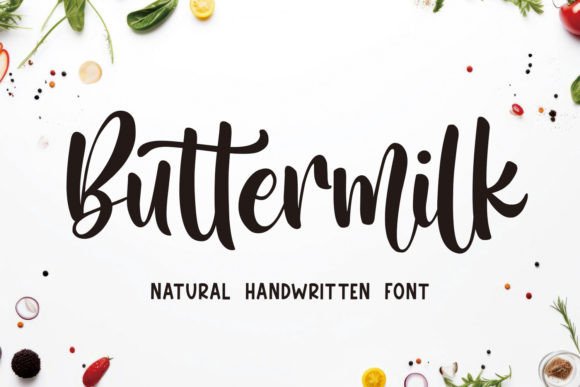
Buttermilk: The Script Font That Captures Holiday Spirit
When a design calls for more than just text, when it needs to whisper a story of warmth and handcrafted charm, the typeface choice becomes critical. Enter Buttermilk, a premium script font that feels less like a digital tool and more like a personal invitation. It's the visual equivalent of a handwritten note tucked into a gift or the careful stitching on a family heirloom. For designers, crafters, and brand builders, Buttermilk offers a distinctive voice that resonates deeply with themes of celebration, nostalgia, and artisanal quality.
Understanding the Buttermilk Aesthetic
Buttermilk is a handwritten font, but its character sets it apart. It avoids the casual, almost sloppy look of some scripts. Instead, its strokes are graceful and its curves are elegant, achieving a beautiful balance between formal script fluidity and approachable warmth. The letterforms have a natural, organic flow, with slight variations that mimic the pressure of a pen or brush, giving it an authentic, hand-lettered feel. This isn't a rigid, technical typeface; it's a creative font designed to evoke emotion and a sense of personal touch.
The personality of Buttermilk is best described as whimsical and charming. It carries the spirit of holidays, Thanksgiving, Christmas, and crafts in its very DNA. Looking at it, you can almost feel the cozy atmosphere of a festive gathering or the quiet focus of a craft lettering project. This makes it an incredibly powerful display font for projects that need to connect on an emotional level. It’s not just about conveying information; it's about setting a mood.
Where Buttermilk Truly Shines: Practical Applications
The strength of a font like Buttermilk lies in its versatility within specific contexts. It’s not a workhorse for body copy, but as a creative font for headlines, logos, and accents, its applications are broad and impactful.
- Branding & Identity: For businesses in the artisanal, boutique, or lifestyle space—think bakeries, craft shops, floral studios, or cozy cafes—Buttermilk can form the core of a warm, inviting brand identity. It works beautifully in logo design for a business that wants to signal handmade quality and personal service. Pair it with a clean sans serif font for body text to create a balanced and professional font pairing.
- Publishing & Editorial Design: In editorial design, Buttermilk excels for chapter titles, pull quotes, or section headers in magazines, blogs, and recipe books. It adds a layer of personality and breaks up the monotony of standard text, guiding the reader’s eye with its elegant curves. For a holiday cookbook or a craft tutorial booklet, it’s an ideal choice.
- Packaging Design: Product labels, gift tags, and packaging design benefit immensely from a handwritten touch. Buttermilk can make a jar of homemade jam or a scented candle feel like a cherished gift. Its intricate details look stunning on printed materials, adding perceived value and authenticity.
- Digital & Social Media: While it requires careful consideration for web design due to readability at small sizes, Buttermilk is fantastic for large hero text, website banners, or social media graphics. It instantly communicates a festive or artisanal vibe in Instagram posts, Pinterest pins, and digital invitations.
- Personal Projects & Crafts: This is where the font feels most at home. For creating personalized greeting cards, festive decorations, embroidery patterns, or scrapbook layouts, Buttermilk provides that perfect, heartfelt script. It’s a go-to design asset for hobbyists and crafters seeking professional-quality lettering.
Making Buttermilk Work: A Designer's Practical Guide
Integrating a character-rich script font like Buttermilk requires thoughtful execution. Here’s how to use it effectively to enhance readability, hierarchy, and brand perception.
Pairing for Balance and Hierarchy
The golden rule with any ornate display typeface is to pair it with something simple and legible. Buttermilk demands contrast. A sturdy, geometric sans serif font (like Montserrat or Lato) or a classic, readable serif font (like Lora or Merriweather) makes an excellent companion. Use Buttermilk for the main headline or a key phrase, and the simpler font for subheadings and body copy. This creates a clear visual hierarchy that guides the reader without overwhelming them.
Evaluating Project Fit and Readability
Before committing, ask: Does this project's tone align with Buttermilk's whimsical, nostalgic character? It’s perfect for a wedding invitation but might feel out of place in a corporate annual report. Always test the font at the intended size. Its strength is in larger display sizes where its elegant curves can be appreciated. For smaller text, legibility can decrease, so reserve it for headlines and short phrases.
Leveraging Included Styles and Licensing
A professional premium font like Buttermilk often includes multiple styles—such as regular, bold, or even alternate character sets and ligatures. Explore these options to add variety and solve specific design challenges. Furthermore, for any commercial use—from client work to products for sale—ensure you have the correct commercial font license. This is a non-negotiable step for professional designers and businesses to maintain legal compliance and support type designers.
In the landscape of modern typography, Buttermilk carves out a meaningful niche. It’s more than a typeface; it’s a tool for storytelling. By understanding its personality and applying it with strategic care, you can leverage its charm to create designs that don’t just look beautiful, but feel genuinely heartfelt and authentic. It’s a reminder that in our digital world, the most powerful designs often carry the touch of a human hand.